




The gas cap is a reliable covering that prevents vacuum or pressure from escaping while preventing dust, debris, and other contaminants from entering the fuel system. It plays an important role in the car's emission system, but can a bad gas cap cause a vacuum leak?
Yes, a bad gas cap can cause a vacuum leak in your vehicle. The fuel system's integrity is measured as either pressurized or under-vacuum. When there is a leakage in any part of the fuel system, including the gas cap, the system will fail to pressurize or vacuum.
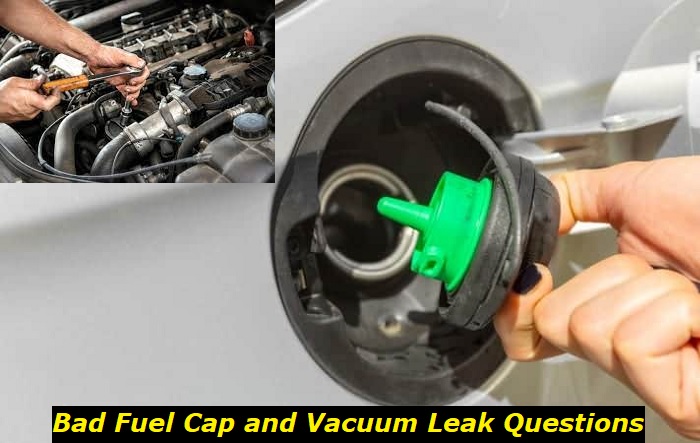
This article will examine the following points:
- The fuel system and emission control.
- Symptoms of a bad gas cap
- Causes of a bad gas cap
- Does a bad cap affect the drivability of the car?
- And how to fix a bad gas cap from causing a vacuum leak
Let's get right into it!
The Fuel and the Emission Control System
To better understand why a bad gas cap will cause a vacuum leak, a proper explanation of how the fuel system functions is necessary.
The fuel system consists of the gas cap, fuel tank, injector filter, filler neck, fuel tank pressure sensor, EVAP canister, etc. These components must work flawlessly so that the vehicle performs well and pass the emission test.
When you fill up your tank from the gas station, the gas travels to the tank and from the tank to the fuel pump. The fuel pump forces fuel through a line or hose to the carburetor (For carbureted engines) and then to the engine for combustion. The fuel filter then removes debris or other contaminants from the fuel before it reaches the engine.
However, a major concern of gasoline-powered engines is the evaporative gas from the tank. When the engine cools off, evaporative gas is released from the stored fuel in the tank. The evaporative gas is then stored in the EVAP system until it is needed again.
Also, since the entire system is pressurized, some of these fumes may remain in the vent line, canister, or tank until the engine starts and the fumes are burned during combustion. When any components of the fuel system are malfunctioning, this pressurized gas is released into the atmosphere.
Symptoms of a Bad Gas Cap
As discussed earlier, the gas cap plays a crucial role in the fuel system and prevents pressure from leaking. Here are some of the common symptoms you may notice if your gas cap is damaged.
1) Smell of fuel from outside the vehicle
Due to the frequent opening and locking of the fuel cap, it may become worn out and leak fuel vapes from the tank. The wear and tear of the cap means the gas cap is unable to seal the fumes, resulting in a vacuum leak. It is important to know that these vapes are highly flammable and pose a safety and health hazard to people around you. Therefore, you will need to replace the cap as soon as possible
2) Check engine warning light
A problem with the fuel system may trigger the check engine light in your vehicle. The warning light on its own does not indicate a problem with the fuel system; instead, you may rely on other symptoms accompanied by the light to properly diagnose.
Furthermore, the fuel delivery system is quite complicated, starting from the gas cap to the tank. The fuel tank pressure sensor reports to the PCM when there is a drop in pressure, which then triggers the warning light.
3) Emission related trouble codes
If the EVAP system fails and there is a triggered check engine light in the vehicle, you will most likely have a stored code on your system. The EVAP system works with sensors that help to monitor leaks by sending real-time data to the EVAP and PCM for interpretation.
Now, when there is a suspected leak, the most likely cause we point to is the gas cap. While it is not the only cause, it is quite inexpensive and easy to fix. However, sometimes, you may need a diagnostic scan to trace the actual cause.
Examples of related EVAP system trouble codes include:
- P0440: Evaporative Emission Control System Malfunction
- P0455: System Gross Leak Evaporative Emission
- P0442 or P0456: Small EVAP System Leak
- P0456: Evaporative Emission Control Leak
4) Poor Fuel Economy
Another serious symptom of a bad gas cap is poor fuel economy. When the cap is damaged and won't seal well, debris and other contaminants may cause serious issues and even clog the fuel filter. It is also possible for fuel vapor to escape in older cars, although less likely in new cars because of their one-way designed fuel delivery system. When this vapor escapes, you are likely to have poor fuel economy, as it's the same as fuel leaving the car.
5) Gas cap not fitting properly
If your gas cap isn't fitting as it used to, the thread around the cap must have worn out. These caps are sometimes made of plastic and will easily wear from frequent opening and locking of the cap. It is also possible that the cap is clogged up with dirt that prevents it from locking properly. In which case, you want to clear the dirt stuck in between.
6) Discoloration of the tank mouth and cap
Because the gas cap doesn't seal the tank properly, gas vapor will escape, leaving deposits that will discolor the tank mouth and the gas cap. The color will typically turn brown and, once seen, maybe a sign of gas vap escape in your vehicle.
How to fix a bad Gas cap in your vehicle?
If you suspect your bad gas cap is responsible for a vacuum leak, you can now easily diagnose and fix the problem easily. The only way to fix a bad gas cap is to replace the cap with a newer one with better sealing. However, not all evaporative vacuum leaks are caused by a bad gas cap.
In this section, I will discuss how to diagnose and fix a bad gas cap responsible for a vacuum leak in your vehicle.
1) Scan for stored code
I have always recommended that my readers scan for stored code, especially with the check engine light on or the gas cap warning light. Scanning for code helps eliminate guesswork in your self-diagnosis. Typically, the P0440 and P0455 are indications that the EVAP leak is coming from the gas cap. Note: Ensure the tank is a minimum of 15% full and a max of 85% full to get accurate data from the scan
2) Inspect the gas cap
Once you confirm that the P0440 and P0455 are stored on your vehicle computer, you will want to inspect the gas cap for damages. Here is how you do it:
- Toggle the gas cap left and right, then up and down to see it is tightly sealed.
- Look for signs of discoloration in the gas tank mouth or cap.
- Inspect the thread and plastic seal around the mouth of the cap. Many times broken seals are often the causes of vacuum leaks.
- Check for dirt accumulation around the cap thread.
3) Clean the gas cap
If you suspect the difficulty in sealing is caused by accumulated dirt that clogs p the cap, clean it well with a cloth. Close the gas cap and check if it seals properly.
4) Replace the gas cap
After confirming that the gas cap is the cause of the vacuum leak, replace it with a manufacturer-specific gas cap that is compatible with your vehicle. This should fix the issue.
5) Reset the system
After replacing the gas cap, drive the car for at least 24hrs. The system should automatically reset, and the warning light should go off. However, if the light still persists, a manual reset using an OBD II tool will be necessary.
Plug your OBD II scanner to the port under the steering wheel. Search for the stored code and proceed to clear all stored code. After which you should drive the car and pay close attention to the warning light in case it comes back.
Does a bad gas cap affect the vehicle's drivability?
No, a bad gas cap will not affect your vehicle's drivability. However, a bad gas cap will cause your vehicle to fail the emission test, which is compulsory in the United States. It also constitutes a health and fire hazard, as the gas is toxic and highly flammable. I recommend you replace your gas cap immediately to keep your car and everyone safe.
Final Word
As discussed earlier, the gas tank plays a major role in the EVAP system and the safety of your vehicle. Apart from keeping the vacuum from escaping, it also prevents dirt and contaminants from entering the fuel system.
This article also identified the major causes of bad gas as worn-out seals or broken threading. It is also recommended that the gas cap be replaced immediately. Failure to replace the gas cap may constitute a fire and health hazard. Also, you will likely fail your vehicle emission test with a bad cap.
About the authors
The CarAraC research team is composed of seasoned auto mechanics and automotive industry professionals, including individuals with advanced degrees and certifications in their field. Our team members boast prestigious credentials, reflecting their extensive knowledge and skills. These qualifications include: IMI: Institute of the Motor Industry, ASE-Certified Master Automobile Technicians; Coventry University, Graduate of MA in Automotive Journalism; Politecnico di Torino, Italy, MS Automotive Engineering; Ss. Cyril and Methodius University in Skopje, Mechanical University in Skopje; TOC Automotive College; DHA Suffa University, Department of Mechanical Engineering



Add comment