




All-wheel drive has been used in cars for quite a long time, but in the last few years more and more manufacturers have adopted this solution for their vehicles and it's easy to understand why. These systems are extremely useful in bad conditions, such as heavy rain or snow, since they provide a lot more grip and traction when driving.
Another great advantage of all-wheel drive is that it's also good enough for some mild off-roading, which might be very useful if you live somewhere in the countryside.
However, as with every good thing, there has to be a downside to it. In this situation, we're going to answer a very good question, which is if all-wheel drive uses more gas or not. We're going to explain to you how this system works, and how it affects your fuel economy and we're also going to give you a few tips on how to save fuel.
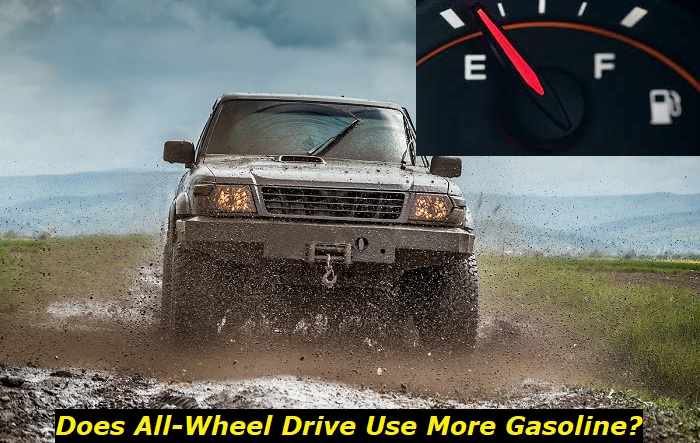
What exactly is the all-wheel drive?
As the name suggests, all-wheel drive, commonly known as AWD, is a system that sends the engine's power to all four wheels of the vehicle, unlike traditional setups that only send their power to either the front or to the rear wheels.
These systems operate without any input from the driver and they are usually controlled by computers. Using various sensors, they can detect how much power they should send to each axle, or, in certain cases, to each wheel, based on the surface of the road and on how much grip there is in every moment.
Vehicles equipped with all-wheel drive have extra components, such as differentials, prop shafts, and additional driveshafts, which means that they are a lot more complex than traditional layouts.
Advantages and disadvantages of all-wheel drive
Now that you have a basic understanding of how an all-wheel drive system works, we're going to talk about its advantages and disadvantages, because, as we've mentioned earlier, not everything is perfect.
Let's start with the good things, shall we?
- Improved traction
One of the main advantages of an all-wheel drive system is the improved traction that comes with such a system. Not only they can be very clever when it comes to how they split the power between the front and rear axles, but no matter how you look at things, there are more wheels to which the power can go.
This is especially useful in cars that have very powerful engines since the use of such a system can eliminate useless wheelspin. All-wheel drive also helps when trying to set off in difficult conditions, such as snow or mud, especially when going uphill, where two-wheel drive cars could struggle.
- Better grip
All-wheel drive also helps a lot when it comes to how much grip there is, and this thing is a lot more noticeable when going through corners. The tighter they are, the more obvious the presence of an all-wheel drive system is. The best systems out there can work their magic in such ways that they effectively eliminate both understeer and oversteer, giving you a lot more confidence in the car.
- Better value
This might not always be the case, but it is common enough that we should mention it. When it comes to certain cars which are available to buy with both two-wheel drive and all-wheel drive, the second one is usually more valuable and holds its value better.
- Improved weight distribution
Since all-wheel drive systems require additional components which are fitted to one of the two axles, this usually helps balance the weight distribution, often resulting in a 50-50 balance, which is usually the perfect balance every manufacturer tries to get as close as possible to.
- Useful off-road
Even though an all-wheel drive system isn't exactly the same as a 4WD system, which is common in most off-road vehicles, it's still very useful in more difficult conditions and it's a lot more capable when compared with a vehicle that only has two-wheel drive.
Quite good selling points, right? To balance things out, let's now talk a little bit about the disadvantages of all-wheel drive.
Here are some of the common drawbacks of this system:
- Increased fuel consumption
Going back to the main question of fuel economy, unfortunately, the answer to it would be yes. Since there are more components that the engine must send its power to, this means that the stress on it will be significantly higher, which will result in increased fuel consumption.
- Higher purchase price
While the advantage would be that such vehicles usually hold their value better, the disadvantage is, quite obviously, the higher purchase price. All of the extra components and clever technology come at a cost, usually quite a significant one.
- More expensive maintenance
If you think about all of the extra components, you will probably understand what this extra maintenance means. Every additional component requires a certain servicing at some point and if left unattended, they might cause quite serious issues with the transmission. Are all-wheel drive vehicles less reliable? Not necessarily. It's just a case of more things going wrong.
- Bigger power loss
As we've mentioned earlier, there are more components that the engine needs to send power to, which not only results in increased fuel consumption but also in a bigger power loss. This might not be so obvious at low speeds or rarely, if ever, in very powerful cars, but in cars with low and moderate engine outputs, this will be a lot more noticeable when driving at higher speeds, especially when compared to the two-wheel driver equivalent.
How to save fuel?
Since you now know that all-wheel drive does indeed use more fuel, we believe that you might want to know how to save fuel. Here are a few tips:
- Anticipate the traffic - Nobody expects you to guess every other's participant next move, but one thing you could try would be to think ahead of the traffic. Notice when others are slowing down, or which lanes are getting a bit busy, and think about what your next move should be.
- Accelerate moderately - You might be surprised to find out that most of the time there is absolutely no need for you to mash the accelerator pedal in order to move. Try to be as gentle as you can, without annoying the other road participants.
- Drive at a constant speed - Driving at constant speed is where the engine works at its best and where the fuel economy is as good as it gets. If the road surface is perfectly flat, you might find that the cruise control actually uses less fuel. However, if it's not the case, you should know that the cruise control's focus is the speed at which it is set and not the fuel economy.
- Coast as much as possible - Braking effectively wastes fuel, so avoid braking when possible and let the vehicle coast for as long as you can. Engine braking is one of the most efficient ways to save fuel.
- Check tire pressures regularly - The tires should always be at the recommended pressure by the manufacturer in order to avoid extra drag. Even if it might seem a bit insignificant at first, you would be surprised by how much having the right pressures helps.
- Avoid unnecessary loads - When was the last time you checked all the stuff you have in your car? You might find that there are loads of things that you don't actually need and you're carrying them around without any particular reason. This also applies to roof racks that are not only extra weight, but also cause a lot of drag, which affects the fuel economy.
- Drive with the engine at operating temperature - As you might know, engines work best at their specific operating temperatures, so avoid driving over very short distances and try to turn your engine on and off as little as possible.
- Use the air conditioning only when necessary - Air conditioning affects both the vehicle's fuel consumption and its performance, so we would recommend you use this option only when absolutely necessary.
Should you buy a vehicle with all-wheel drive?
The answer to this question depends a lot on what you're looking for in a vehicle. If the advantages are good enough for you then yes, we would recommend you buy an all-wheel drive car.
If you simply don't see an advantage after driving such a vehicle and you usually drive in good conditions, then you might want to think again before buying such a vehicle.
Final thoughts
All-wheel drive can be great in certain situations, especially in difficult terrain conditions, but it also comes at a cost of increased fuel consumption, among others. In the end, we always recommend you test drive such a vehicle before deciding if you should buy it or not and you will probably be able to make up your mind after that.
About the authors
The CarAraC research team is composed of seasoned auto mechanics and automotive industry professionals, including individuals with advanced degrees and certifications in their field. Our team members boast prestigious credentials, reflecting their extensive knowledge and skills. These qualifications include: IMI: Institute of the Motor Industry, ASE-Certified Master Automobile Technicians; Coventry University, Graduate of MA in Automotive Journalism; Politecnico di Torino, Italy, MS Automotive Engineering; Ss. Cyril and Methodius University in Skopje, Mechanical University in Skopje; TOC Automotive College; DHA Suffa University, Department of Mechanical Engineering



Add comment